Money in Bali: ATMs, Money Changers, Cards and QRIS for Tourists
Money in Bali for tourists: rupiah notes, ATM fees for foreign cards, how to spot a licensed money changer, QRIS for six countries and cash rules.
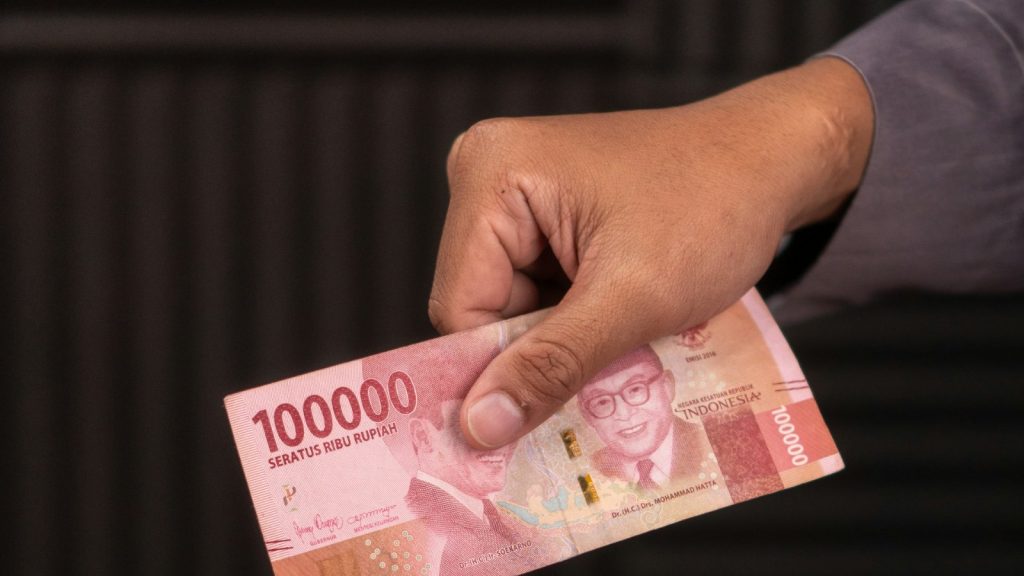
Money in Bali means Indonesian rupiah. By law, almost every payment on the island has to be made in rupiah, so dollars, euros and Australian dollars need to be changed or withdrawn first. In early November 2026, one US dollar bought around Rp18,100 to Rp18,250, according to Bank Indonesia’s JISDOR reference rate.
Tourists have more options than ever. ATMs are everywhere in the main resort areas, and Bali has hundreds of licensed money changers. Visitors from six countries can now pay by scanning QR codes with their home banking apps. Each option has its own fees and pitfalls.
Key points:
- Rupiah is required for transactions in Indonesia under Law No. 7 of 2011 on Currency.
- Bank Mandiri charges foreign Visa and Mastercard cards an access fee at its ATMs, on top of your home bank’s charges.
- Use only licensed money changers. Bank Indonesia lists them on moneychangerbali.com.
- Tourists from Thailand, Malaysia, Singapore, Japan, South Korea and China can pay at any QRIS merchant with their home apps.
Indonesian rupiah notes to know
The current paper notes are Rp1,000, Rp2,000, Rp5,000, Rp10,000, Rp20,000, Rp50,000 and the red Rp100,000, which shows independence leaders Soekarno and Hatta. Bank Indonesia released a new series in August 2022, but older series remain legal tender until they are formally withdrawn. You will see both in circulation.
Zeros are the most common source of confusion. Rp100,000 is worth roughly US$5.50, and Rp10,000 roughly US$0.55. Many shops write prices in thousands, so “50K” or “50” on a menu means Rp50,000. Keep smaller notes for taxis, warungs and tips, since vendors often lack change for Rp100,000 notes.
Using ATMs in Bali with a foreign card
ATMs are the simplest way to get rupiah at a fair exchange rate, but fees vary by bank. Bank Mandiri, one of the largest ATM networks, began charging foreign-issued Visa and Mastercard cards an access fee of Rp50,000 per transaction in February 2026. Its notice says the fee will rise to Rp100,000, according to the bank’s customer notice. JCB and UnionPay cards are exempt, and the fee appears on screen before you confirm.
Other banks, including BCA and BNI, do not publish fees for foreign cards, and travellers report that charges differ by machine. Withdrawal limits per transaction are also set by the bank and the machine. Many ATMs dispense around Rp2.5 million to Rp3 million at a time.
- Decline the conversion offer. If an ATM or card terminal offers to charge you in your home currency, choose rupiah instead. The machine’s exchange rate is usually worse than your bank’s.
- Use ATMs attached to banks or inside malls and supermarkets. They are better monitored. Bali police have arrested foreign gangs installing skimming devices on ATMs in past years.
- Cover the keypad when entering your PIN, and check the card slot for anything loose.
How to spot a licensed money changer
Money changers in Bali must be licensed by Bank Indonesia as KUPVA BB. A licensed changer displays a Bank Indonesia certificate, the company name, the official licensed money changer logo with a QR code, and staff identification, and staff will ask to see your passport, ANTARA reported. Bali had 601 licensed money changer offices in 2025, and Bank Indonesia runs moneychangerbali.com so tourists can find them.
Unlicensed changers are behind most cash scams. The usual trick is sleight of hand: notes are counted in front of you, then some quietly slip under the counter before the stack is handed over. In January 2026, tourists exchanging money in Ubud said they were short Rp950,000, detikBali reported.
“We are making sure that all money changers in Bali operate legally in line with the regulations.”
Achris Sarwani, Head of Bank Indonesia’s Bali Representative Office (translated from Indonesian)
He made the comment in October 2026 as the provincial government brought customary villages into monitoring of money changers, according to ANTARA. Rates that are far better than everywhere else on the street are a warning sign.
Paying with QRIS and cards
QRIS is Indonesia’s national QR payment standard, and the black-and-red QRIS sticker is displayed at shops, cafés and even street stalls. Visitors from Thailand, Malaysia, Singapore, Japan, South Korea and China can scan it with supported apps from home, without registering, for payments of up to Rp10 million per transaction, according to Bank Indonesia. The app shows the amount in your own currency.
Foreign tourists made 17.8 million cross-border QRIS transactions worth Rp6.2 trillion up to August 2026, Kompas reported. A link with India is planned but not yet live.
Visa and Mastercard credit cards are widely accepted at hotels, larger restaurants and supermarkets, though some places add a surcharge of a few percent. Small warungs, markets and drivers usually want cash.
Rules on carrying cash
Travellers entering or leaving Indonesia with Rp100 million or more in cash, or the foreign-currency equivalent, must declare it to customs. Failure to declare carries a penalty of 10% of the amount, capped at Rp300 million, DDTC News reported.
Inside Indonesia, the Currency Law requires rupiah for payments made in the country. Paying, or demanding payment, in foreign currency can be punished with up to a year’s detention and a fine. Villas and tour operators sometimes quote in US dollars, but payment should still be settled in rupiah.
Money tips for Bali:
- Arrive with a little rupiah or withdraw at the airport for your first taxi and meals.
- Carry two cards from different networks in case one is blocked or a machine swallows it. Tell your bank you are travelling.
- Count money at the counter and do not hand it back once counted. Leave if the changer refuses to let you count.
- Keep small notes for tips. Our guide to tipping in Bali lists common amounts.
- Plan your budget. See what a month on the island costs in our cost of living in Bali guide.
A mix of ATM withdrawals, a licensed money changer for larger amounts and QRIS or cards where available keeps fees low and cash risks small.
Main photo: An Indonesian Rp100,000 banknote. Photo: Defrino Maasy via Unsplash (Unsplash License).
Was this article helpful?

Author
Fiki AprianNext article
Best Time to Visit Bali: Month-by-Month Weather and Crowds

Read more

Indonesia Digital Nomad Visa (E33G): Requirements, Cost and Tax
Indonesia’s digital nomad visa, the E33G remote worker visa: US$60,000 income rule, Rp7 million fees, what work is allowed and the 183-day tax test.
Fiki Aprian
Best Time to Visit Bali: Month-by-Month Weather and Crowds
The best time to visit Bali is April to October for dry weather. Month-by-month rainfall, crowds, the late 2026/27 rainy season and key 2027 dates.
Fiki Aprian

Tipping in Bali: How Much to Tip Drivers, Restaurants and Hotels
Tipping in Bali is optional but appreciated. What “++” means on a bill, how much to tip drivers, guides, spa and hotel staff, and how to tip in rupiah.
Fiki Aprian